

Here are just some of the many places and settings featured in the ‘Saltbury Chronicles’ stories.
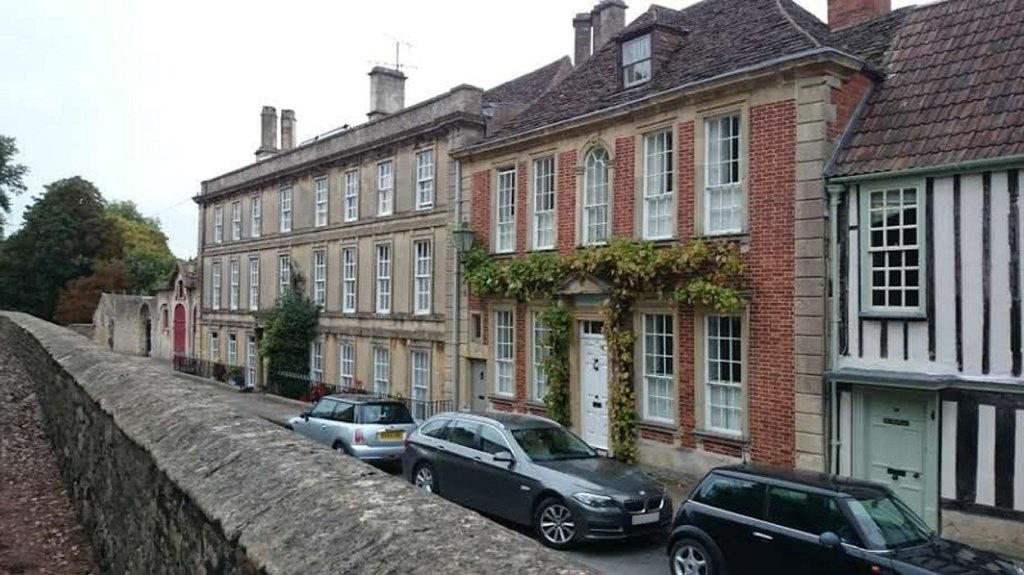
Saltbury (See town map).
The ‘Saltbury Chronicles’ mostly take place here. Saltbury is Hazel, Tina and Carol’s home town. It is not a real place in our universe, nor is it based on one. It is just a prosperous market town at some indeterminate point in north-western Wiltshire, somewhere towards the eastern edge of the so called ‘Cheese’ or clay country. It is quite picturesque, and would look a little like Chippenham does in our Universe, with many of the older buildings built of the lovely honey-coloured limestone of the area, while Regency and later buildings were more likely to be built in brick made from the local clays once the advent of the canal and then the railway made coal from the Somerset coalfields cheap enough to use in firing them.
Today, the town lies close to the M4 motorway and has a busy main-line railway station on the former Great Western, London to Bristol line, which allows easy commuting to Bristol, Bath, Chippenham, Swindon and even London. In earlier times the town was also on the line of the now defunct Wiltshire and Berkshire Canal, so it has good connections to the rest of the country, but still retains a more intimate small town feel.
The town sits in the shallow valley of the slow-flowing but un-navigable River Murtle, a tributary of the Thames. It originally grew up around the point where the Roman road to London bridged that river. Its oldest bridge today is Medieval in date, and lies immediately east of the Market Square where it carries the oh so originally named Bridge Street. The market was the town’s original economic base and unlike it’s neighbour, Dowchester it had no Roman settlement, and no castle or monastery in the Middle ages, although a large burial mound in the churchyard bears witness to Neolithic activity. The Market is still held every Wednesday, although the original livestock market has now been moved to the outskirts. The Medieval parish Church also fronts onto the Market Place and was largely built with the money raised by Market dues and merchant donations. It is dedicated to St. Ann, which is why so many other institutions in the town commemorate her, notably St. Ann’s School for Girls in South Street. The church is limestone built and has a tower, but no steeple. Parts of it date back to the twelfth century, but most of the surviving fabric is fifteenth century, with a good deal of ‘Oxford Movement’ Victorian modification to the interior.
The town’s year-round population is around 45,000, but Saltbury is a university town which adds a further 10,000 or so students in term time. It also serves a large rural hinterland, so it manages to maintain unusually good cultural and sporting facilities for a place of its size, including the University theatre/concert hall, a substantial museum/library, a swimming pool, an athletics track and so on. The wider catchment also means that this small town maintains three large secondary schools, a range of largely cellar based night-spots, a bus station, a large park with boating lake and an unusually vibrant town centre.
———————————————
Saltbury places. (See town map).
Bamptons. This is a Saltbury clothes shop. It specialises in quite posh but distinctly staid women’s clothes and is also the town’s main supplier of school uniforms. It sits on the corner of High Street and East Street.
The Bluebell Inn. This is a cute Olde Worlde pub on West Street, slightly closer to the town centre than Cheapies and on the opposite side of the road. The entrance stands above street level, reached by a flight of steps. It is one of the oldest surviving buildings in Saltbury, being late 16th century and half timbered. The town is very proud of it and it has a whole section in the Saltbury tourist guide.
Brassington’s Jewellers. Brassington’s is a family owned independent jewellers. It sits at the corner of High Street and River Street, next to Burgess’s cafe/bakery. It is run by Arthur Brassington and his daughter June.
Burgess’s Cafe/Bakery. This is a bakery on the High Street, which has a 1st floor cafe where you can order wears from the bakery, such as pies and pasties, served hot with chips/beans/gravy etc. Tina and her mother, Mary, often go here when they have lunch in town and it is popular generally for its comfort food.
Burns & Son Solicitors. This is Tina Burns’ father’s law practice and is based in an attractive 18th century building on the west side of the Market Square, next door but one to the Museum. Desmond Burns is actually the son part of the name, the original Burns being his late father, Arthur Burns. It is Tina’s ambition to be the next Burns in the firm.
34 Burton Lane. Angela’s house. This is a standard semi on the north side of town near the railway bridge over the Murtle. Carol’s ex lives here sharing with two other single female teachers.
The Bus Station. Saltbury lies at the heart of an extensive rural bus network, which brings people in to work and shop, and takes children to and from school. There are also longer distance busses running between towns both near and far. The present day bus station lies between the Market Square and East Street to the north and south, and between High Street and the river to west and east. Most of it is an open area, with a building at the river-side that holds the booking office, waiting room and toilets.
Canal Street. Saltbury is on the line of the former Wilts & Birks Canal, which opened in 1810 during the Napoleonic wars. The canal was made largely obsolete by the arrival of the Great Western Railway in 1841, but lingered on until final closure in 1914. The canal ran close to the railway through the northern part of the town and its bed was filled in after closure and turned into a new street. The street name is now virtually all that remains to show that Saltbury ever had a canal.
Carol Baxter’s House. Carol lives at 27 Fiddlers Walk, Saltbury. This is a small 1960s three bedroom house on a substantial estate of similar units. It is a corner property and so detached, in what is otherwise an estate of mostly semi-detached houses. Carol is buying on a mortgage she can only just afford. Her friend Diane Kemple lives next door but one at No’ 31.
Castle. This is not a castle in fact, it is a large Neolithic burial mound in the churchyard which has wonderful views over the river, but it looks rather like an old Motte. The locals always call it ‘Castle’, rather than ‘The Castle’, ‘Castle mound’ or some such.
The Castle Fitness and Dance Centre. This is a Gym come dance school run by married couple Joyce and Bernard Deveraux. It is located in the east side of Market Square, more or less opposite Burns & Son Solicitors. It is the Gym where Carol Baxter goes to train, usually accompanied by her father Gordon and sometimes Tina.
The ‘Cheap Rent Club’. This is a small, live Indie Rock venue and nightclub in Saltbury. It lies towards the upper end of West Street in a distinctly run down, cheap rent area on the fringe of the town centre (hence the name). Its patrons generally refer to it as ‘Cheapies’. Above ground is an old workshop, now subdivided into units that make it what Hazel calls “a one building bohemian district”. These include a secondhand record shop, punk/Goth/Rock clothes and accessories shops, craft shops and a vegetarian cafe.
The ‘Dick Turpin Inn’, Park Road. This is a modern pub on the main road out of Saltbury to the west. It is Tina’s local and she rather likes it, although it is a bit soulless with microwave cuisine and fizzy beer.
The ‘Gemini’ Club, (often known as ‘The Gem’). This is Saltbury’s one and only gay night spot. In reality it’s an outwardly rather tatty cellar dive, but it has a devoted clientele who never see it in daylight. Meanwhile, the internal decor is flamboyant and largely the creation of its regular patrons, who redecorate every few years to have fun and save time and money. It hides away in Bishop’s Ride, a grandiose name for what is little more than an alleyway going towards the river from the High Street. The alley has famously bad drains and tends to flood in heavy rain, although the club itself stays high and dry. It belongs to Doug Taylor a trans man although these days it is largely run by his daughter, Pippa.
The Grand Hotel. Formerly the Railway Hotel, this was built in the 1840s, in grandiose style, by the GWR as part of the station complex. It is now a popular lunch venue for Saltbury’s business elite. In the evenings its dining room is the town’s most prestigious restaurant.
Greffen’s bookmakers. Is an independent bookie in Star Street, Saltbury, owned and run by the father of Simon Greffen, who used to ride the school bus every day with Hazel and Annie.
Igor’s. Often known as ‘The Goth Shop’ this is a retail unit in the ‘Cheapies’ building that sells all things Goth, from make-up to clothes and even vampire canines. Hazel Fauld loves to window-shop here, but can’t afford the prices.
‘The Impedance Club’. This is a disco club in New Street opposite the University. It is a lot cleaner than most of Saltbury’s night-spots, being above ground in a modern building, rather than a Victorian cellar.
Jardine’s Fruit Shop. Is a traditional independent fruit and veg shop on Saltbury High Street. It sits on the west side of the road, almost opposite the entrance to Bishop’s Ride. Yvonne Wright had a Saturday job here all through her sixth form years and met her future girlfriend Julie Worth here, as Julie worked in the shop several days a week, and later full time. It’s run by Mrs Jardine.
Jenkins Hardware. This is a proper old fashioned ‘they’ve got it what ever the size is’ family run hardware shop on the east bank of the river on East Street, i.e. the other side of the Murtle from the Bus Station.
Johnson’s Student Bookshop. This is Saltbury’s one proper bookshop and serves the town as well as the University. It sits in River Street and has an old fashioned wooden fascia, which carries the words: ‘Those who are tired of Saltbury are tired of life’ in gold cursive script – a misquote with which the original Dr. Johnson (who said it about London) may or may not have seen eye to eye.
The Kohinoor, is an Indian restaurant in Star Street, just outside the main shopping area. It is almost next door to the Silver Peaches in the same run of 1970s shops. The block has a concrete awning covering part of the pavement outside, to keep the weather off the passers-by. It is owned and run by the Choudhuri family. Tina once found a cute Venus pendant on the carpet under one of the tables (see ‘Annie’). She handed it in and when no one claimed it, Mr. Choudhuri said she could keep it. The incident formed the basis of Annie’s ghost story.
Laburnum Close, Saltbury. This is a street of three bedroom Victorian terraced houses in the south-eastern part of Saltbury. A number of its inhabitants appear in the stories. Carol Baxter grew up at number 18, indeed her parents still live there. Both of her grandmothers live in the street, and Yvonne Wright and her mother live at No’ 42.
Lee’s Cafe. Is a traditional independent greasy spoon type cafe on the south side of the Saltbury Market Square. It is only a moment’s walk from Burns & Sons, and Tina and her father often have lunch here. So do Yvonne and Julie on lunch breaks from Jardines’, and Tina and Rosie go there when on their Saturday trips to go window shopping.
The Manor Hotel. This is a large 1960s built hotel/restaurant in a semi-rural environment on the western fringe of Saltbury. It is a popular venue for wedding receptions, conferences and other such gatherings.
Saltbury Market. Saltbury has an open market every Wednesday, held in the Market Square between Bridge Street and St. Ann’s parish church. The square is Saltbury’s one major public space and many other events are held here, including the occasional fun fair. In December it becomes a week-round Christmas market.
Nan Tuckett’s Southern Fried Chicken. This is a fast food restaurant on Star Street which sell American style fried chicken, burgers and so on. Carol and Tina both love it. Hazel and Annie also meet here sometimes, especially on Tuesday evenings after Annie’s keyboard lesson and Hazel’s 1st aid class. It is owned and run by the eponymous Nan who is something of an Earth-grandmother to Saltbury’s teenagers.
Nelson Terrace. Is a street of small Victorian terraced houses. Julie Worth’s sister Beth and her husband live at No’ 45. Back in the 1970s, Grant Annandale and his boyfriend Rich Telford lived at No’ 17.
Park View. To the west of Saltbury Park is a ridge which overlooks it. Along its summit runs Park View, the poshest housing in the town where Zara, Jenny Marlow and Katie’s boyfriend Steve live. Zara has a penthouse flat in luxury block, ‘The Queen’s Building’. Tina says that if Saltbury had a stockbroker belt, Park View would be it.
The Prodnoze Arms. This is a pub at the very top of South Street, about half a mile south of St. Ann’s School for Girls, past the sports grounds. It is about half way between the school and Carol Baxter’s house in Fiddler’s Walk and she and Tina tend to treat it as their local. It does good, if not very original, pub grub.
River Murtle. Saltbury originally grew up around the point where the road to London bridged the river. Today’s river was somewhat canalised in the 18th century to aid navigation and barges still came into the town until the mid 19th century. However even the improved river could take nothing larger than a narrow-boat, so the arrival of the railway in 1841 soon took virtually all commercial traffic off the water and one of the town’s famous landmarks is Brunel’s magnificent all-iron bridge which carries the line over the river valley just to the north (downstream) of town. These days the river has become popular again with boats, but in this case these are pleasure craft. Saltbury High School has a canoeing club which operates in the reach around the school and there is a town rowing club just downstream of the railway bridge which occasionally produces international calibre rowers. The river is also well loved for its scenic quality. It is slow-flowing and about 40m wide in the town centre. A family of swans cruises the reach just below the Medieval bridge. They have been there since well before living memory and local legend has it that the same swans have been there throughout the town’s history. Obviously that is impossible, but it does show how deeply the birds have become part of the town’s self image. The Murtle is a tributary of the Thames and the Wye Burn, the little stream that runs past the Fauld’s ‘Cottage’ is a tributary of the Murtle, so Hazel tells Chantel that the water that flows past her home will help float Chantel’s tug a day or two later.
Riverside Walk. This is a pretty footpath which runs along the west bank of the River Murtle right the way through central Saltbury. It resembles a canal towpath, except the river is too shallow for commercial traffic, so the only users are the High School canoe club, and a rowing club lower downstream. There is an iron rail that stops people falling in, which is set at a height where it is comfortable to lean on it to gaze at the ducks and swans, and the path goes under the arches of all of the town bridges. I’m afraid that Hazel uses this fact as a St. Ann’s School senior to have a lunchtime smoke out of sight.
Saint Ann’s Parish Church. Although much remodelled over the years, especially by the so-called ‘Oxford Movement’ in the 19th century, the origins of the church date back to the early Medieval Period, and the site had been used for religious purposes even before Christianity, as is demonstrated by the huge Neolithic burial mound in the grounds, which the locals call ‘Castle’. It is a tower church and sits on a rise above the River Murtle near the Medieval bridge. It fronts onto the northern end of the Market Square. Inside, many of the Prodnoze family tombs can still be found, including that of Sir Jeremiah, the town’s famous 19th century benefactor.
Saint Ann’s School for Girls. . Named after St. Ann’s parish church, this is the single sex school attended by Roisin and Hazel Fauld, Tina Burns, Rosie Drymen, Annie Roberts and Yvonne Wright (i.a.). In some respects it’s a very old fashioned school, with a hideous brown and yellow uniform, but it does genuinely believe that its girls deserve the best possible education. It was founded in 1847 by wealthy local landowner Sir Jeremiah Prodnoze, who also founded the town’s University some years before. It now sends a higher proportion of its alumni on to University than any of the town’s other schools.
Tina describes the style of the main building, with its over ornamented facade as Railway Gothic. It sits beside South Street, south-east of the University and well above the level of the river and Market Square. The old Victorian main building fronts onto the road, but with the cheaply constructed, 1930s ‘New building’ hidden behind it, whose flat roof leaks and badly needs replacing. The New Building contains science labs and was made necessary when the schools famous reforming headmistress, Dr. Grace L. Sanderson, who reigned between the two World Wars, radically widened the curriculum to include sciences and higher level mathematics. This was against considerable local opposition, especially as she wanted to include Biology at a time when many thought that respectable ‘gels’ shouldn’t know about such things. Nevertheless, she persuaded the town to fund the New Building’s construction to provide the necessary extra classrooms, and to fund science teachers.
The school sits at one side of a group of sports facilities, including games pitches, a running track and a small indoor swimming pool, which it shares with co-ed Saltbury High School, and the Saltbury Athletics Club. The High School is on the other (NE) side of these pitches, on Schoolo Row. The school has a number of very active sports teams, notably its cup-winning hockey team. We get the impression that St. Ann’s is a fee paying school, although this is never confirmed. Certainly it was when Debbie Stewart was at school in the 1970s because her deeply sexist father refused to send her there, even though her mother was an old girl, because he thought “Only a fool would pay to educate a girl”. The school’s assembly hall contains a famous and very beautiful pipe organ, which looms large in its brochure. Sadly though, it hasn’t worked for many years and the school can’t (or won’t) afford the repairs.
Saltbury Athletics Club. The track borders South Street for its entire long axis length, with only a fence between them, which Tina is easily tall enough to see over. It is shared between St. Ann’s, Saltbury High and the Athletics Club itself. Carol Baxter’s father, Gordon is its coach/groundsman. As well as the actual track, there are facilities for long/high and triple jumping, the pole vault and the various throwing events. There is a clubhouse which is not shared with the schools, which has storage rooms for kit and a club room with bar.
Saltbury Comprehensive School. As well as St. Ann’s and Saltbury High, there is also a comprehensive school in the town. It sits to the east of the river near the hospital. Carol Baxter went there as a girl and has not forgotten her roots, so she is always very keen to recruit from the school for her ‘Specials’, to give those girls a good chance in sport. The school has few sports facilities of its own and Carol herself only got the excellent grounding she did because her father was coach at the Athletics club. Her ex girlfriend, Angela, teaches French there and is actually a far better teacher than St. Ann’s school’s rather hopeless languages teacher, Mr. Frobisher.
The ‘Saltbury Defender’. This is Saltbury’s local newspaper. It was a 19th century foundation and remains rather straight-laced and Victorian in approach, so its news tends to be heavily bowdlerised.
The Saltbury and Dowchester Rowing Club. Based on the east bank of the Murtle about a mile downstream of town and just bellow the famous iron railway bridge. It has a clubhouse and boathouses arranged along a concrete staithe. Tina becomes a keen rower there, rowing in the ladies double scull team and later, her daughter Millie becomes just as keen.
Saltbury General Hospital. This is a largely modern foundation and lies to the east of the river on the continuation of East Street. All four Fauld daughters were born in its Maternity Unit. . Julie Worth was treated here after being beaten by her husband.
Saltbury Golf Club. The course lies on low lying ground just to the west of town, not far from Carol Baxter’s house. The club house is reached down a steep, unsurfaced private road called with total unoriginality: Golf Course Lane. The latter comes of the end of Viola Crescent, a long and actually very straight road which also links Fiddler’s Walk, where Carol lives, with South Street, one of Saltbury’s main streets. There is a public footpath through the course much used by Carol on her morning runs.
Saltbury Hall. This is the ancestral home of the Prodnoze family and lies a few miles to the NW of the town of Saltbury. It was the home of many of the Baronets, including the famous philanthropist Sir Jeremiah Prodnoze, but it is now a corporate HQ and much of the former parkland surrounding it is not occupied by housing. However the ornamental lake and a woodland walk/carriage drive is open to the public and a favourite spot for nature walks for Annie and Hazel in their teens as it is also within easy cycling distance of Wyeburn.
Saltbury High School. This is the co-ed equivalent to St. Ann’s and sits on School Row (a branch off South Street) on the other side of the playing fields from St. Ann’s. Boy-mad Katie Ralstrick goes there, much preferring co-ed to the girls-only environment of St. Ann’s. Decades before, all of the members of ‘Xeroed’ went there, including Debbie Stewart. ‘Xeroed’, in fact, began as a High School, hobby band.

Saltbury Museum and Art Gallery. This is a rather grandiose Italianate structure on the Market Square, next door but one to Burns and Son Solicitors, and it also houses Saltbury’s library. It was formerly the townhouse of famous local benefactor Sir Jeremiah Prodnoze. He had fallen in love with the Italianate style when on a grand tour of Italy and had the house specially deigned to replace a rather tumbledown Jacobean period house on the site. He eventually gifted it to the town, not least because he soon discovered that the architecture made the place virtually impossible to heat in a damp British winter, so he was barely able to use it except in summer.
Saltbury Park. The Park lies to the west of the town centre, off Park Road, which is the main route out of town to the west and the route to both the Motorway and to Wyeburn. Tina’s home in Lincoln Crescent, is a left turn off Park Road as you leave town (so south of the road) and the Park is a bit further on, on the right (north). The park itself is quite substantial and has room for an artificial lake with a circumference of around 600m. There are benches and a paved path round the water and a metalled road to the Park Road main gate big enough to let ice-cream vans get to the lakeside. In the summer there are rowing boats for hire on the lake, and Tina is an accomplished rower. Years ago there were also little hand cranked paddle boats, which a very young Carol Baxter used to love, but these have now disappeared. The Rugby Club has its ground in the Park’s south-east corner and there are also a couple of tennis courts.
Saltbury Police and Fire station, is at the junction of Cross Street and Station Road, just to the west of the Market Square. It is a single large building, but with the two sections firmly separate.
Saltbury Public Baths are on West Street, which runs at right angles to High Street on the side leading up-hill, away from the river. It’s an Edwardian structure with lovely Minton encaustic tile-work, but with a hideous modern steel and glass structure built up towards the roof which the locals have nicknamed the ‘Glass Box Cafe’. The University also has a pool, as does the St. Ann’s/Saltbury High School sports complex. Carol trains in the water a good deal and tends to prefer the town baths to the others.
Saltbury railway station. The station lies just to the west of Saltbury town centre, on the former Great Western Railway’s main line from London to Bath and Bristol, and along with Dowchester, it is an intermediate station on the section between Swindon and Chippenham. This part of the line opened on 31st May 1841. There are four platforms, but at present only two are used. The main buildings and car park are on the town side of the station and the building holds a cafe as well as the ticket office, toilets etc. Alternate London to Bath trains stop here, giving an hourly service in each direction. Trains to the north can be had by changing at Reading for Manchester (a four and a half hour journey), or at Bristol to Birmingham and Scotland via Crewe. Some services also branch south at Chippenham towards Salisbury, Exeter and Southampton. When combined with its close proximity to the M4 Motorway, it provides the town with good long distance transport links.
Saltbury Rugby Club. This is a vibrant amateur club which has a pitch and clubhouse beside Park Road, just to the east of the Park itself. Our friends Mark and Brendan are keen members.
Saltbury Sports. This is an independent sports equipment and clothing shop located near the Medieval bridge on Bridge Street, on the opposite (east) side of the river from the Market Square. It is run by Grace and Norman Heron. Both are middle-aged now, but still very much stalwarts of the Athletics Club. Grace is also Carol Baxter’s aunt (her mother’s older sister). You can buy anything there from a sports bra to golf clubs.
Saltbury University. The university was founded in the 1830s by Sir Jeremiah Prodnoze, the same wealthy land owner who founded St. Ann’s School for Girls in 1847. The big difference is that the University didn’t admit women until the 1930s. It was, however, greatly increased in size in the 1960s, so it has a redbrick core, but is now largely steel, glass and very poor quality concrete. It lies south-west of the town centre, with the main campus stretching along New Street, which becomes Park Road further to the west. Tina thus walked by it every day going to school at St Ann’s. She later studied Law there and her friend Katie Ralstrick was a Drama student. Most of its students live on campus in halls of residence although a good few local students still live at home with their parents.
The Silver Peaches is a rather good Chinese restaurant on Star Street. It is next door but two to the Kohinoor, and occupies another of the same run of shops.
Simkins Discount Furniture. This is a large furniture store in a retail estate in the suburbs of Saltbury. It is owned by the family of Hazel’s old friend Douglas Simkins.
A & E Tate Pre-loved Goods. A second-hand shop by the bridge on River Street founded by Albert and Enid Tate. It is now run by the original owners’ son.
Tina’s childhood home: 11 Lincoln Crescent, is a large 1930s detached property and one of a knot of similar, posh streets. Mary Burns’ nosy friend Mrs. Naysmith lives next door (which is No. 15, to avoid having an unlucky No. 13). Elsewhere on the same estate, Rosie Drymen lives at 14 Bryony Walk and Katie Ralstrick at 6 Charles Townshend Road.
Tina’s adult home. 17 Tudor Close is one of a small estate of four-bedroom detached, 1930s houses which lie to the east of the town, a little outside the rest of the built-up area, with nice views over Saltbury and the river. From Tina’s point of view its best feature is a substantial garden, which she tends with considerable devotion, and Leather, her cat loves it too, if for different reasons.
The Town Hall. Saltbury Town Hall sits on the east side of the Market Square, on the corner with Bridge Street. This early 19th century building includes offices and a meeting room for the Town council. It also contains the town’s Registry Office and a small Tourist Information centre. The actual Council Chamber serves as the town’s only courtroom several days a week.
Tudor Close, is one of a small estate of four-bedroom detached, 1930s villas which lie to the east of the town, a little outside the rest of the built-up are, with nice views over Saltbury and the river. No’ 17 is Tina’s adult home. From her point of view its best feature is a substantial garden, which she tends with considerable devotion, and Leather, her cat loves it too, if for different reasons. No’ 29 was Johnny Sherwin’s childhood home.
6. Tulip Cottages. This is Becky Ward’s home. It’s part of a knot of older houses round an old church. It’s basically what had once been a separate village, but now surrounded by modern housing as Saltbury’s urban sprawl has absorbed it.
16. Verity Mews, is a 1950s semi-detached house in an estate off New Street, beyond the University in western Saltbury. It was the matrimonial home of Yvonne Wright’s girlfriend, Julie Worth.
———————————————
Other local places.
Bartaley. This is the next village north of Wyeburn. Hazel Fauld says it’s far less compact. In fact you can pass through it without really noticing.
———————————————
Chippenden.
Not to be confused with the lovely Wiltshire market town of Chippenham, Chippenden is the next village to the south of Wyeburn. In origin it was much the same size, but in recent decades a number of substantial new housing estates have increased its population a good deal, so it is now substantially larger than Wyeburn and has better shops as a result.
The Golden Dragon. (often just called the ‘Dragon’) Is a Chinese restaurant and takeaway in Chippenden. The Fauld family all love it. It is one of a small block of modern shops which also include the ‘Jewel’, a mini supermarket and a doctors’ surgery.
The Jewel in the Crown. (often just called the ‘Jewel’) This is an Indian restaurant and takeaway. Debbie and Hazel Fauld love it. It does almost insanely hot Vindaloos, which Hazel adores. It’s in the same little block of shops as the ‘Dragon’.
———————————————
Dowchester.
This is the next town east from Saltbury towards London. It is much the same size today, but in the past it was usually larger and more important. As the name suggests, it was a Roman foundation and parts of the Roman town wall survives, absorbed into its Medieval successor. In the Middle ages the town was the seat of the Earls of Dowchester. The ruins of their castle still glower down on the modern town centre. The town centre runs between the castle and the river and has a distinctly more Olde Worlde look than Saltbury. The Hastings family, the Earls of Dowchester, still survive with the present representative, the 9th Earl, but they no longer maintain a home in the town although they still feel a responsibility to the place and take part in town events.
Oldfield’s Music. This is a traditional music shop where you can buy anything from a bassoon to a grand piano, plus sheet music, oboe reeds, metronomes and the like. They proudly don’t sell anything that needs an electrical plug except maybe for electric organs.
Quentin’s Photography, Hastings Street. Wilf Quentin is a freelance photographer that Tina hates modeling for. He does a lot of catalogue work and is actually a very good photographer, but he is a slimy philandering so and so.
———————————————
East Mylford.
This is the village where Debbie Stewart and Nicky grew up. It lies a few miles to the north of Saltbury, and about six miles NE of Wyeburn. It no longer has the ford mentioned in its name, which was replaced by a bridge centuries ago. To its east the chalk scarps start. The village church has an attractive ivy covered Regency period rectory where Debbie’s friend Jenny Wilding grew up, her father being the rector.
The Rectory. Is a large, attractive Regency house that manages to be a freezer in winter and an oven in summer.
Saint Brenda’s Church. Is an early Medieval stone church with a squat tower that holds a clock on the outside and a ring of six bells within.
Sawyer’s Mill House, East Mylford. This was Debbie Stewart’s childhood home. It is a substantial old mill house which belonged to a now defunct water mill. It was not physically attached to the mill, which sits down on a stream valley, while the house is up on a distinct knoll well above any flood levels. It is reached by a lane from the village itself. Deb’s parents still live there, but she has been banned from the place since she was 16.
Two Pines Farm. This is no longer a farm, and hasn’t been for many decades. The farmhouse was simply sold off as a private house when two farms were amalgamated into one large one. It is now the home of the Halton-Smith family and is where Debbie Stewart’s former husband, Nickie grew up. Debbie herself lived there for a while after her parents threw her out.
———————————————
Greater Lessington.
This is a rather diffuse village to the east of East Mylford on the start of the chalk country. It is overlooked by a high chalk ridge which has a wonderful view.
Higher Thornton Farm. ‘Xeroed’ member Charlie Hides grew up here. It is a working farm owned and run by his parents. When not working as a drummer, he still likes to put in time working here.
Dowchester Old Hall. This is a grand house, the centre of a large c. 10,000 acre landed estate. It was once the property of the Earls of Dowchester, but was sold in 1820 to George (later Sir George) Prodnoze and remains in the hands of the family today. There is a large artificial lake, with the present house itself largely Georgian in style, although there was already a hall on the site much earlier.
The ‘Old Hall’ Recording Studio, Near Dowchester. This is a professional recording studio in the former stable block of Dowchester Old Hall, a large country-house between Saltbury and Dowchester. Debbie Stewart comes to like it when she is pregnant with Sofie and thus needs to record closer to home. Several ‘Xeroed’ albums were made here, along with an ‘Aleyse’ album and her solo album ‘Daughters’. The Old Hall itself is the ancestral home of Dame Evadne Rickerman-Prodnoze. She still lives there with her loopy dog, Daphne, and her substantial collection of old cars and motorbikes.
———————————————
Pennington’s Wood. This is a strip of woodland atop the chalk scarp, a mile or so to the east of Saltbury which has a glorious view over the town and on towards Wyeburn and beyond. It’s one of Tina and Rosie’s favorite romantic spots and they often used to ride out on their bikes on nice days in the school holidays. Despite its beauty, few other people ever go there, so they can cuddle in private and enjoy the view. They particularly love to watch sunsets here.
———————————————
Queenscombe Beach. This is a naturist beach on the Dorset coast much beloved of Carol Baxter and her friends Gerald and Antonia Makepeace. Tina comes to like it too, despite being initially rather self-conscious.
———————————————
West Chalk Farm. This is not a farm in fact, or even the farm house from a farm whose land has been amalgamated with another. It is the ultra modern palatial home of Gerald and Antonia Makepiece, multimillionaire haulage contractors. As the name suggests, it is up on the chalk-lands to the east of Saltbury. It has a large garden totally screened from view by tall cypresses trees to screen the occupants who are keen naturists.
———————————————
Wyeburn. (see village map)
This is a pretty village, 3 1/2 miles to the west of Saltbury. It is named after a stream, the Wye Burn, a minor tributary of the Murtle. It lies just a mile or two south of the M4 motorway and just east of the railway from Saltbury to Chippenham. In fact the village had its own station until the early 1960s, but this closed even before the notorious Beeching cuts. It retains a reasonable bus service however. This is Hazel’s home village and it’s where Annie Roberts used to live. The Fauld family live in a large converted cottage just south of the village proper. The main settlement centres on the village green which itself lies at a cross-roads. The parish church of ‘All Saints’ sits at the Green’s north side. The bus shelter and several houses run along the south side, along with the village shop, which is now run as a community enterprise, staffed by volunteers. The ‘Woolsack pub is on the west side, with more houses, and the Village Hall is to the east.
The main historic residential streets pass to the west and south of the Green, with the current houses dating largely to the Regency and Victorian periods, but there is a more modern 1980s housing estate hidden behind the Village Hall, which probably doubled the village’s population. The other residential street, Bartaley Road, goes off towards the north, passing the church to its west. Annie’s family lived up this road. There is a small primary school next to the Village Hall, which takes pupils from a wider rural catchment. Its survival is now rather precarious and it limps on under constant threat of closure. But back in the 1980s, Roisin and Hazel both started school here and at present the place has been given something of a new lease on life with the foundation of a ‘play-group’ for pre school-age children. Until well into the 20th century there was a working water mill on the Burn, about a mile upstream of the Fauld’s house and just the other side of the railway. The attractive millpond and mill structure still survive, the latter as a private house.
———————————————
Wyeburn places. (see village map)
The Community Shop. With the coming of mass car ownership, the generations old Wyeburn village shop and Post Office gradually ceased to be viable as a business. It is still very much needed by the very old and very young of the village though, so it is now run by volunteers on a not for profit basis. The actual building was bought by Debbie Stewart, who rents it to the Shop Committee for the vast sum of one tin of macaroni cheese per quarter. It was originally going to be a tin of beans, but Deb doesn’t really like beans! Deb and Martine both work the occasional shift themselves, too. So you can go and have your potatoes weighed out by one of the biggest (and ironically smallest) Rock stars on Earth.
The ‘Cottage’. This is the home of the Fauld family. In origin, it was exactly what its less than original name suggests: a small country cottage, but the previous owners greatly extended it, adding a second floor and what was supposed to be a large conservatory to act as a playroom for their children. Unfortunately, a builder misread the plan of the latter and built it 25m rather than 25 feet in diameter. This makes it perfect for Debbie, who can conduct full scale ‘Xeroed’ rehearsals here, but she and Nicky were originally able to by it for a song as no-one else wanted such a white elephant. The ‘Cottage’ has a reasonably sized garden, but it also has a paddock where Roisin Fauld used to keep a pony. The Wye Burn runs through the field, and Hazel and her friend Douglas spent many happy hours in their childhood trying to dam it up. The ‘Cottage’ sits beside the Chippenden Road, about half a mile south of the village.
Grafton’s Wood. This is a wood in the valley of the Wye Burn, upstream of the ‘Cottage’s pony paddock. It is quite a local beauty spot and a favourite walk of Debbie and Hazel. The stream runs through a series of small pools at the eastern end, where a kingfisher is often to be seen, and there is a fallen tree with a wonderful view of the water where Hazel and Annie love to sit. They had their first kiss here.
The ‘Limes’. Along with the neighbouring property, ‘The Glades’, this formed one of a pair of modern four bedroom properties at the northern end of the village on Bartaley Road. They were built in the late 1970s and the ‘Limes’ now belongs to an engineering firm who use it to house senior staff on assignment to the area. It was the home of Annie Roberts and her parents, and later, of Hazel Fauld’s cousins, the Watkins family.
The Old Schoolhouse. Wyeburn has a Victorian village school, originally founded by the Prodnoze family in the early 19th century when the village was part of their estates. It was still functioning as a primary school when Roisin and Hazel Fauld were children and both started their education there. But by the time Sofie and Danielle were born it had closed. The attractive building still survived though, and became a sort of supplementary village hall, much used by various groups including the play-group for pre-school children, which meets on weekday mornings throughout the year. This is where Sofie Fauld met her friend Andrew.
The Woolsack. This is the Wyeburn village pub, a much modified Victorian structure. It does food, including very nice Sunday lunches with generously thick sliced beef and proper home-made Yorkshire puds. They also do wonderful Christmas lunches, which the Fauld family love.
The Wye Burn. This is a stream only four or so meters across which runs through Wyeburn village and gives it its name. It then flows through a lovely wooded valley where Hazel and Annie love to walk, through a series of artificial pools, where a kingfisher can often be seen, and then through the Fauld’s pony paddock. Hazel loved trying to dam it up as a child. Ultimately it flows into the River Murtle just outside Saltbury.
Wyeburn All Saints church. This is the parish church of Hazel’s home village. It’s really far too big for the village and in particular has a massively tall, somewhat vainglorious steeple. The latter was a gift to the parish by a wealthy Medieval wool merchant who as Tina says: “wanted to guarantee his place in heaven by showing off to god.” It’s a proud landmark, visible for many miles around, but is something of a bane in the life of the vicar and churchwardens thanks to its voracious maintenance costs. Debbie Fauld is a regular attender at the church, sometimes (to everyone’s surprise) accompanied by Roisin. Deb’s former husband Nicky is buried in the churchyard. The Rev Janet Long is the vicar and the Fauld sister were all baptised there at Debbie’s insistence, despite the objections of the largely atheist Fauld family.
———————————————
Other Places: Britain.
Bristol.
The ‘Pied Piper’ Bed and Breakfast. ‘Dark Portal’ stayed here during the first tour in which Haze was tour drummer in July 2004.
———————————————
Devon.
Forest Cottage, Stokeston Hill. Just to the north of Exeter, this is the home of Mabel Trevithick and her girlfriend Adriana, the Faulds’ former au pair. Her band ‘Dark Portal’ have their rehearsal space in a former cattle shed here.
West Brinton. This is the village on the southern edge of Dartmoor, where Ruth Gregory grew up. Her parents became the local G.P. (mother) and school teacher (father) having moved from London to escape the rat-race.
———————————————
Durham.
St. Claire’s College. The fictional University of Durham hall of residence where Rosie Drymen meets her beloved Lexi.
———————————————
Glasgow.
The Grampian Hotel. ‘Dark Portal’ stayed here during their June 2005 tour, which featured Hazel on drums.
The Orlando Theatre. Is a large theatre on the edge of the city centre which hosts major Rock concerts. ‘Xeroed’ have been known to play here.
———————————————
Manchester.
43 Grafton Close, Withington. This was Adam Dalton’s house when he was a junior lecturer in 1975. It is a perfectly good, if old and rather bottom of the range semi.
The Juno. This is a large Rock venue where ‘Xeroed’ play regularly.
413 Whitlow Road, Withington. This was Roisin’s home while she was at Manchester University. It is a flat that takes up most of the first and second floor of a greengrocer’s shop.
The Taj Mahal restaurant, Whitlow Road, Withington. A nice, but inexpensive restaurant popular with students and young people, just a few shops further down from Roisin’s Withington flat. Hazel loves their red hot Vindaloos.
———————————————
Norfolk.
Friedhorn. ‘Xeroed’ headlined the Rock Festival on land in the countryside just outside the town in September 1976. After their performance, Debbie was separated from the rest of the band while she signed an album cover for one of the security guards. As she was making her way back to her trailer a mad man attacked her. Martine fought him off.
Friedhorn General Hospital. Debbie Stewart was treated here after being attacked in 1976.
———————————————
Nottingham.
The Victoria Theatre. Is a large theatre on the edge of the city centre which also hosts major Rock concerts. ‘Xeroed’ have been known to play here.
———————————————
Sheffield.
The Forgemaster Theatre. Is a large venue which also hosts major Rock concerts. ‘Xeroed’ often play here on tour.
———————————————
Stirlingshire.
Blair of Frew, Stirling. This was the camp site, on a farm, used by the dig crew when Debbie Stewart joined her then boyfriend, archaeologist Adam Dalton, on an excavation in the area in 1975.
Wester Drumuck, Stirling. Debbie Stewart joined her then boyfriend, archaeologist Adam Dalton, on an excavation on an Iron Age farmstead here in 1975.
———————————————
Other Places: Abroad.
Greece.
Kos. Tina Burns goes on holiday to the island with her parents while she was split up with Carol. Here she meets Marcus and the two come within an ace of becoming lovers, her only heterosexual relationship to even come close to actually becoming sexual. In the end both decide they have unfinished business from the past, but they end up genuine friends after an idyllic time.
———————————————
Rome.
Debbie Stewart married her childhood sweetheart, Nicky Halton-Smith, in Rome while they were in the city on tour on 11-5-1974.
The Lucius Aurelianus Hotel, Rome. ‘Xeroed stayed here on tour in May 1976. It is a modern tourist hotel.
———————————————
Los Angeles.
The Arthur Bertrold building. West 14 Street, Ruthventhorne. This is a luxury apartment block in a suburb to the north of the city, where Annie Roberts lives for a year while her parents are assigned to a dam project. They live in Apartment 17a.
Eric’s Rock Club. This is a cellar Rock venue on the fringes of downtown L.A. and the local equivalent of ‘Cheapies’ in Saltbury. It is one of Annie’s favorite places while she lives in the city and she takes Haze when she visits in summer 2003.
St. Benedict Hospital, Ruthventhorne. This is the efficient modern hospital where Annie is taken after she is poisoned, and which manages to save her life against the odds.
———————————————
Poland.
The Stanislaw Hotel, Warsaw. A tourist hotel back in Iron Curtain days. ‘Xeroed’ stay here while touring in Communist Poland in 1976.
———————————————
Spain.
The Ferdinand Magellan Hotel, Madrid. ‘Xeroed stayed here on tour in May 1976. It is a modern tourist hotel. It had a pool and Ruth and Aleyse discovered their mutual love of swimming here. Debbie Stewart was sent death threats here, but the gig passed off safely.
The ‘Hotel Navegadores’, Malaga. ‘Dark Portal’ stayed here during their European tour of July, 2005, with Hazel Fauld back as their tour drummer.
———————————————
 Jo Brodie